Tuesday, 28 June 2016

HEALTH TIPS: SMOOTHIE IS HEALTHY


The simple answer is the inclusion of unhealthy ingredients. It’s not too difficult to identify an unhealthy diet – it’s one comprised mainly of unhealthy foods. The same goes for smoothies. After reading this post I’m confident you’ll be able to discern between healthy and unhealthy smoothies with ease.
First, I will attempt to cover all the things you don’t want in your smoothie, which cause the scale to tip in favor of unhealthy. Then I will list the healthy ingredients, and in doing so show you that creating healthy smoothies is actually pretty easy.
A quick note before moving onto the unhealthies. Most restaurants, chains, venues, and large events serving smoothies generally lean towards the unhealthy. The smoothie served there was nothing more than sugary slush.
Unhealthy Smoothie Bases
We’ll start with the liquid base of your smoothieand what you want avoid like the plague.

Sugar laden fruit juices: Most fruit juices sold in super markets are nothing more than flavored sugar water.

Regular milk: Store bought milk (whether skim, 1%, 2%, or whole) comes from cows that are often mistreated, given hormones and antibiotics, and over milked. Chalk and pus have also been detected in the milk.

Tap water: Recent studies have revealed a plethora of undesired substances in regular old tap water. This includes, but is not limited to, trace amounts of pharmaceutical drugs, lead and arsenicperchlorate (a toxic chemical found in rocket fuel), sucralose, and many other man-made chemicals

Most bottled water: Most mainstream bottled water is nothing more than glorified tap water. Pepsi even admitted that Aquafina comes from tap water. For the definitive story on bottled water I highly recommend the documentary Tapped

Unhealthy Smoothie Ingredients

Now onto the list of smoothie ingredients that I wouldn’t add into my blender if you paid me. An exhaustive list isn’t practical, but I’ll hit on the more obvious offenders.
  • Ice cream and sherbet
  • Chocolate syrups and powders – think Nestle
  • Sugar as a sweetener
  • Agave nectar – why
  • Most store bought honey – why
  • Non-organic peanut butters (Jif, Skippy, Smuckers)
  • Cheap protein powders – why
  • Chocolate pudding mix
  • Cool Whip or whip cream
  • Cream soda
At the end of the day, just use a little common sense in determining what not to add to your smoothie.
How To Make Your Smoothie Nice and Healthy
Now that you know what not to add to your smoothies, let’s get to what you can toss in the blender to make the healthiest smoothies ever! Instead of using the word organic over and over, I’ll mention here that using organic ingredients is always in your best interest. I realize this isn’t always possible and don’t beat yourself up over it. At the very least try to avoid the “Dirty Dozen”

Healthy Smoothie Bases
Fresh juice: There’s nothing better than using fresh juice, whether from a juicer or squeezed.

Raw milk, almond and coconut milk: If you’re not lactose intolerant, raw milk is a great option. Almond milk and coconut milk (and water from young/Thai coconuts) are great to use too. I didn’t include soy milk because there’s evidence soy isn’t the health food it’s been marketed as, for reasons why you should avoid soy.

Good water: This includes water run through a good filter, legitimate bottled water (Spring Mountain, Starfire), distilled, purified, and the best option spring water. 

Tea: Using a healthy or medicinal tea can really improve the nutrition of your smoothie. In some circles “elixir” is the term used to designate these drinks.

Fermented beverages: Kefir (milk and water), kombucha, and Hindu lemonade. These are all extremely healthy options, especially when homemade.

Healthy Smoothie Ingredients
There may be some things on the list below that you’re not familiar with, don’t worry, in future recipes and posts I’ll explain why each ingredient is good for your health and a welcome addition to your smoothie.
  • Fresh and frozen fruit
  • Fresh vegetables
  • Fresh sprouts
  • Yogurt (organic, Greek, homemade)
  • High quality protein powders
  • High quality superfood green powders
  • Superfoods (cacao, maca, aloe vera, goji berries, spirulina, etc)
  • Herbs and spices (cinnamon, ginger, nutmeg, cayenne, mint, etc)
  • Local and/or organic honey
  • Stevia
  • Hemp seeds and hemp protein
  • Raw nuts and nut butters
  • Various coconut products (shreds, flakes, raw meat, oil, butter)
  • Flax seeds and oil
  • Chia seeds and chia seed gel
  • Oatmeal
  • Gelatin
  • High quality salt(Celtic sea salt, pink Himalayan salt, Redmond salt, etc)
  • Medicinal mushroom powders
  • Chinese herbs
  • Mineral supplements
  • Colostrum
  • Pine Pollen
As you can see there’s quite a few ingredients available to make healthy smoothies. The number of different concoctions and recipes is endless. Once you get the basics of smoothie making down, you can experiment and come up with your own favorite recipes.
I hope you found this information both informative and actionable. After all this talk of smoothies.

STAWBERRY SMOOTHIE
 
RECIPE                2-3 SERVINGS

1 cup frozen strawberries
1 cup of milk
¼ cup of sugar
1 banana
8 -10 ice cubes

Directions
1.    Put all ingredients in blender.
2.  Blend until smooth.


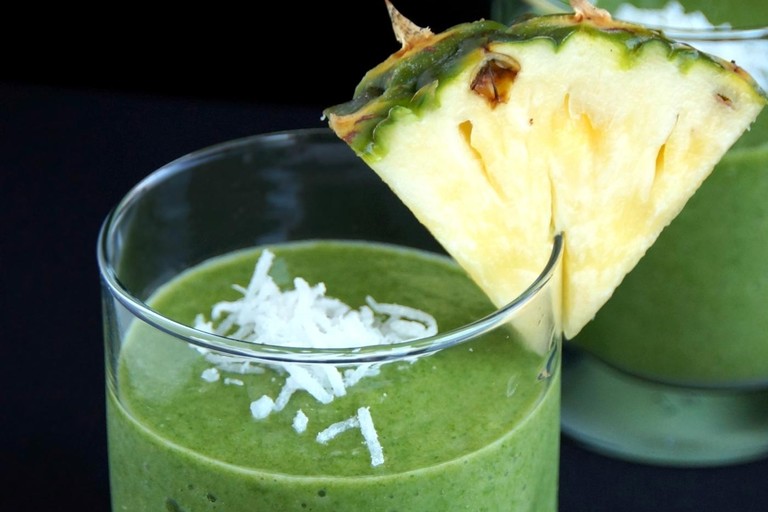
Tropical Paradise Green Smoothie
Recipe                           2- 3 servings
2 cups of pineapple
1/2 cucumber
2 cups coconut milk
1/2 banana
2 cups shredded coconut

Directions

1.    Put all ingredients in blender.
2.  Blend until smooth.


Monday, 27 June 2016

LOCATION PICK: KENYA


Tourism in Kenya is the second largest source of foreign exchange revenue following agriculture. The Kenya Tourism Board is responsible for maintaining information pertaining to tourism in Kenya.


The main tourist attractions are photo safaris through the 19 national parks and game reserves. Other attractions include the mosques at Mombasa; the renowned scenery of the Great Rift Valley; the coffee plantations at Thika; a view of Mt. Kilimanjaro across the border into Tanzania; and the beaches along the Indian Ocean.
Beach tourism, eco-tourism, cultural tourism, and sports tourism are all part of the tourism sector in Kenya. During the 1990s, the number of tourists travelling to Kenya decreased, partly due to the well publicised murders of several tourists. However, tourism in Kenya is one of the leading sources of foreign exchange along with coffee. 


Following the controversial 2007 presidential election and the 2007-2008 Kenyan crisis that followed, tourism revenues plummeted 54 percent from 2007 in the first quarter of 2008. It fell to 8.08 billion shillings (US$130.5 million) from 17.5 billion shillings in January–March 2007 and a total of 130,585 tourists arrived in Kenya compared to over 273,000 that year. Tourist income from China dropped 10.7%, compared with over 50% from traditional revenue earners the United States and Europe. Domestic tourism improved by 45%, earning the tourist sector 3.65 billion shillings out of the 8.08 billion in the period being reviewed.


Conference tourism was badly hit during the first quarter, dropping by 87.4% compared to the growth that occurred in 2007. Conference attendance declined also with 974 people arriving in Kenya during that period while many conferences were cancelled. Business travel declined by 21 per cent during the time period and 35,914 travellers came into the country compared to 45,338 during the same period the year before.
Kenya won the Best Leisure Destination award at the World Travel Fair in Shanghai, China, in April 2008. The Permanent Secretary in Kenya's Ministry of Tourism, Rebecca Nabutola, stated that the award "goes to testify that Kenya has a unique world acclaimed tourism product. The recognition will no doubt boost Kenya's tourism and enhance its profile as a leading tourist destination."
Tourist numbers reached a peak of 1.8 million visitors in 2011 before sliding because of murders and terrorist attacks in 2013 and 2014 that prompted travel restrictions and advisories including from England. International tourist arrivals for 2013 were 1.49 million.
A large proportion of Kenya's tourism centres on safaris and tours of its great National Parks and Game Reserves. While most tourists do visit for safari there are also great cultural aspects of the country to explore in cities like Mombasa and Lamu on the Coast. The Masai Mara National Reserve is usually where the Maasai Village can be found; a site that most tourists like to visit. In addition, There are also a lot of beaches to visit in Kenya, where you can experience water boarding, surfing, wind surfing and many more fun activities that are good for Kenya's economy


 National Parks

Kenya National Parks are controlled by Kenya Wildlife Services, who look after and protect the areas. The wages of workers in the National Parks are usually funded by entrance fees charged for safaris and tours. Unlike Animal Reserves, National Parks allow strictly no human habitation. Kenyan national parks are an extremely common tourist attraction in Kenya.
Amboseli National Park
Main article: Amboseli National Park
Amboseli National Park, formerly Maasai Amboseli Game Reserve is in Kajiado District, Rift Valley Province in Kenya. The park is 390 km2 (150 sq mi) in size at the core of an 8,000 km2 (3,000 sq mi) ecosystem that spreads across the Kenya—Tanzania border. The local people are mainly Maasai, but people from other parts of the country have settled there attracted by the successful tourist-driven economy and intensive agriculture along the system of swamps that makes this low-rainfall area (average 350 millimetres (14 in) per annum) one of the best wildlife-viewing experiences in the world. The park protects two of the five main swamps, and includes a dried-up Pleistocene lake and semi-arid vegegation.
Kora National Park
Main article: Kora National Park
Kora National Park is located in Coast Province, Kenya. The park covers an area of 1,787 square kilometres (690 sq mi). It is located 125 kilometres (78 mi) east of Mount Kenya. The park was initially gazetted as a nature reserve in 1973. It was gazetted as a national park in 1990, following the murder of George Adamson by poachers.[12]
Lake Nakuru National Park
Lake Nakuru National Park (168 km2 (65 sq mi)), created in 1961 around Lake Nakuru, to the south of Nakuru Town, in the Great Rift Valley. It is best known for its thousands, sometimes millions of flamingos nesting along the shores. The surface of the shallow lake is often hardly recognisable due to the continually shifting mass of pink. The number of flamingoes on the lake varies with water and food conditions and the best vantage point is from Baboon Cliff. Scientists have calculated that the Flamingoes feed on 250,000 kilograms of algae per year for each hectare of surface area (220,000 lb/acre). Also of interest is an area of 188 km (117 mi) around the lake fenced off as a sanctuary to protect Rothschild giraffes and black rhinos.
Mount Kenya National Park (0°07′S 37°20′E), established in 1949, protects the region surrounding Mount Kenya. Initially it was a forest reserve before being announced as a national park. Currently the national park is within the forest reserve which encircles it. In April 1978 the area was designated a UNESCO Biosphere Reserve. The national park and the forest reserve, combined, became a UNESCO World Heritage Site in 1997.
Nairobi National Park
Main article: Nairobi National Park
Nairobi National Park is a national park in Kenya. It became Kenya's first national park when it was established in 1946. It is located approximately 7 kilometres (4 mi) south of the centre of Nairobi, Kenya's capital city, and is small in relation to most of Africa's national parks. Nairobi's skyscrapers can be seen from the park. The park has a large and varied wildlife population. Only a fence separates the park's animals from the city. Migrating herbivores concentrate in the park during the dry season. It is one of Kenya's most successful rhinoceros sanctuaries. The park's proximity to Nairobi causes conflicts between the park's animals and local people and threatens animals' migration routes.


In 1995, there were 34,211 hotel beds with a 44% occupancy rate. 1,036,628 visitors arrived in Kenya in 2000 and tourism receipts totalled $257 million. That year, the US government estimated the average cost of staying in Nairobi at $202 per day, compared to $94 to $144 per day in Mombasa, depending on the time of year. In 2013, the Ugandan Tourism Board recognized Kenya's tourism industry as generating an amount of $66 million annually from Ugandan tourists.


THE PROFILE: JOSEPH BENJAMIN


JOSEPH BENJAMIN is a multi-talented Nigerian Nollywood actor, Benjamin was born 9 November 1976, to a Kogi State indigene father and an Anambra State mother. He attended primary school in Benue State and completed his secondary education in Lagos State. He attended University of Nigeria, Nsukka, where he earned a diploma in Computer Literacy. 


 Benjamin married in 2004; he and his wife are now separated. The handsome Nollywood Nigerian actor is blessed with two lovely children, a 10 year old daughter and 7 year old son.

 Image result for joseph benjamin and his old wife
    Benjamin has starred in several television series, including Edge of Paradise, in which he was being "crushed on" by his neighbor's daughter and has appeared in TV and radio commercials.
Nollywood actor Joseph Benjamin made his first screen debut appearance in a popular television program titled ‘Tales by Moonlight‘ where he acted as a homeless child. His first movie was in 1993, and is titled Crossroads. Award-winning
He has co-hosted, with Adaora Oleh, MTN Project Fame West Africa since 2009 Season II (a reality TV show).


   Joseph Benjamin grabbed a remarkable role as the co-star of Mahmood Ali-Balogun’s movie ‘Tango With Me‘ alongside Nollywood megastar actress Genevieve Nnaji in 2011.


He played a detective in the movie Murder at Prime Suites (MAPS), which was inspired by an actual occurrence in Lagos, Nigeria, about a woman murdered by someone she met on Facebook. Other movies to his credit include Dark Side, Married but Living Single, and Mr. and Mrs.

 
Joseph Benjamin was nominated for Golden Actor in the Golden Movie Awards which held on 21 May 2015. The nominees for this category also includes actors like Gbenga Tityloye, John Dumelo, Adjetey Anang and Blossom Chukwujekwu. 


WATCH: OMOGE OFEGE

BENJAMIN'S TOP 10 MOVIES ON IROKOTV